
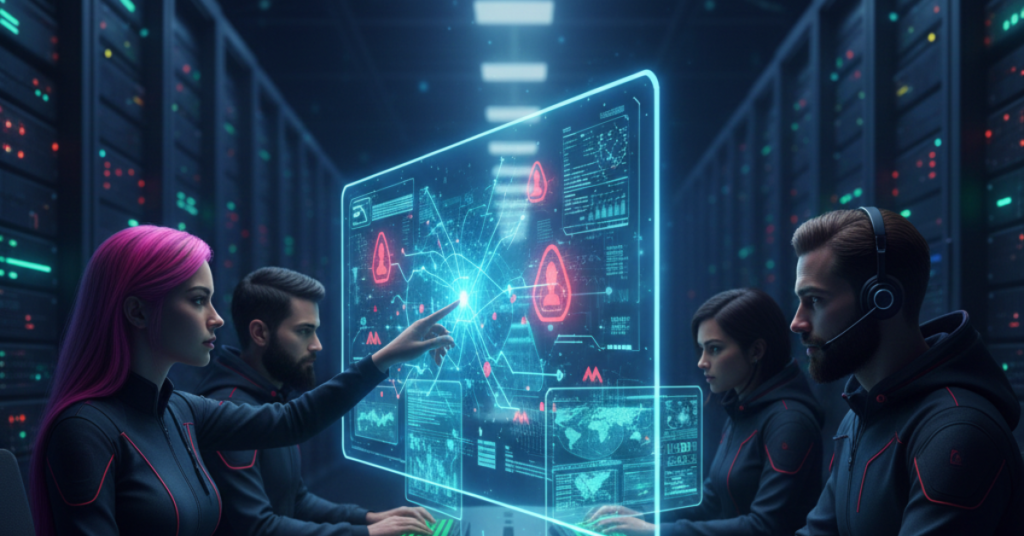
Master essential cybersecurity tips 2026 to defend against AI phishing and ransomware. Learn how to secure your digital life with our expert guide.
What is Cybersecurity?
- At its core, cybersecurity is the practice of protecting systems, networks, and programs from digital attacks. These cyberattacks are usually aimed at accessing, changing, or destroying sensitive information; extorting money from users via ransomware; or interrupting normal business processes.
- The industry often refers to the CIA Triad as the gold standard for security:
- Confidentiality: Ensuring only authorized users can access data.
- Integrity: Ensuring the data is accurate and untampered with.
- Availability: Ensuring systems and data are accessible when needed.
Top Cybersecurity Threats to Watch in 2026
As technology advances, so do the methods used by bad actors. Here are the most prevalent threats currently facing the digital world:
AI-Powered Phishing: Gone are the days of obvious typos in “Prince of Persia” emails. Hackers now use Large Language Models (LLMs) to craft perfectly written, highly personalized messages that are nearly impossible to distinguish from legitimate communication.
Ransomware 2.0: Beyond just locking files, modern ransomware often involves “double extortion,” where hackers steal data and threaten to leak it publicly unless a second ransom is paid.
IoT Vulnerabilities: With the explosion of smart home devices, every connected lightbulb or thermostat is a potential entry point into your private network.
Deepfakes and Social Engineering: Using AI to mimic voices or video during business calls to authorize fraudulent wire transfers.
5 Essential Steps to Protect Your Digital Life
Implementation doesn’t have to be overwhelming. You can significantly reduce your risk profile by following these best practices:
- Enable Multi-Factor Authentication (MFA)
MFA is the single most effective way to prevent unauthorized access. Even if a hacker steals your password, they still cannot access your account without the second “factor” (usually a code from an app like Google Authenticator or a physical security key). - Use a Password Manager
Humans are terrible at creating and remembering complex passwords. Use a reputable password manager to generate and store unique, high-entropy passwords for every single account you own. - Keep Software Updated
Those “Update Now” pop-ups are often delivering critical security patches. Cybercriminals frequently exploit known vulnerabilities in older versions of software. - Practice “Zero Trust”
The Zero Trust Architecture is a security model based on the principle of “never trust, always verify.” Treat every link, email, and file as potentially malicious until proven otherwise. - Regular Data Backups
In the event of a ransomware attack or hardware failure, an offline or cloud-encrypted backup is your only guaranteed way to recover your data without paying a criminal.
Privacy and Compliance: A Legal Necessity
For business owners, cybersecurity is now a legal mandate. With the expansion of global laws like GDPR and newer 2026 digital privacy acts, a single data breach can result in fines that bankrupt a small to medium enterprise. Security is no longer just an “IT expense”—it is a legal shield that protects your company’s reputation and financial standing.
The Future of CyberSecurity: Resilience Over Prevention
While we strive for 100% prevention, the modern philosophy has shifted toward Cyber Resilience. This means building systems that can withstand an attack and recover quickly with minimal damage.
“There are two types of companies: those that have been hacked, and those that don’t know they’ve been hacked yet.” — John Chambers, Former CEO of Cisco.
The Looming Shift: Preparing for Quantum-Resistant Security
As we look toward the immediate future, we must acknowledge the “Harvest Now, Decrypt Later” strategy being used by advanced threat actors. They are stealing encrypted data today, betting that future quantum computers will be powerful enough to crack current encryption standards. To combat this, 2026 has become the year of Post-Quantum Cryptography (PQC). Businesses and individuals are beginning to transition to new cryptographic standards that are designed to withstand the immense processing power of quantum computing. Prioritizing platforms that offer quantum-resistant encryption isn’t just a futuristic concept—it’s a vital step to ensure that the private data you store today remains private for the next decade.
The New Battlefield: Agentic AI and the 24/7 Threat Cycle
As we navigate the mid-2020s, the “human vs. machine” narrative in cybersecurity has evolved into something far more complex. In 2026, we are witnessing the rise of Agentic AI—autonomous software agents that don’t just follow a script, but make real-time decisions to bypass defenses. For the average user or business owner, this means the threat is no longer a static “virus” you can catch with a scan; it is a dynamic adversary that learns from your behavior.
Conclusion
Cybersecurity is a continuous journey, not a one-time destination. By staying informed and adopting a proactive mindset, you can navigate the digital world with confidence.
To want more, follow ARAVALS